
JeffB418
HYDROS Expert
Here is a simple DIY project for using the 4 0-10V output channels of a WE or X4 to control 4 DC outputs. This is handy if you have devices that run off a common DC voltage (either 12V or 24V since they are very common for aquarium devices) that you'd have to be able to turn off and on using hydros. Plus it can reduce the number of power supplies you have as well. Note that all the devices you are driving have to be using similar fixed voltage supplies. Some supplies used to drive LEDs are fixed current and not fixed voltage and will not work directly in this application (and you will need to use an isolated supply/relay channel for those).
What you will need:
- Either a GX12-6 cable you can cut/modify (like this one Amazon.com) or if you are good with soldering, a GX12-6 connector and some wire.
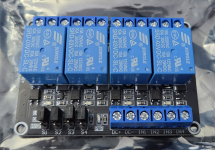
- OONO 4 channel relay module (Amazon.com) NOTE: this comes in 3 versions, 5V, 12V, and 24V. Buy the model that matches the voltage you need on your outputs. See note below.
- AC/DC Power supply. Either 12V or 24V based on your design (also make sure your OONO module matches the power supply needed). See below on capacity notes.
- DC Barrel Plug Pigtails. If you are powering devices that already use DC supplies, typically they mostly use 5.5x2.5mm or 5.5x2.1mm DC plugs. You can get both types from Amazon in pigtail format to easily wire into the relay module. They also make adapters that will plug into a 5.5x2.1mm that can adapt to a wire variety of other plug sizes. When looking for these cables, make sure to account for current needed for the device you are powering. The lower the wire gauge, the better. Find 18AWG or bigger (lower number) if possible.
OONO Modules:
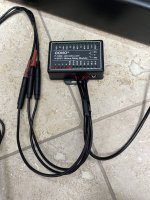
This relay module is pretty handy. It comes in 3 voltage options for powering it. 5V, 12V, and 24V. Since it requires more power than the Hydros supplies on the 5V pin of the 0-10V port (needs 300mA while hydros only has 150mA), you WILL have to power it externally. But if you take advantage of the output voltage you need on the controlled outputs, you can reduce your need for separate supplies. For example if you have 4 JEBAO pumps that each use 24V supplies, just get 1 single 24V power supply with enough power capacity to drive all 4 pumps PLUS the 300mA of the module. To make things easier, if you can settle on 1 common output voltage for all 4 outputs (either 12V or 24V) it will make wiring much easier. This isn't a requirement but for this tutorial it is an assumption.
Also something to note, all 3 versions of this relay box accept a WIDE voltage range for the input control ports. So the full 0-10V output of the Hydros can easily be accepted into any of the 3 versions. Any voltage over 2.5V will trigger the relay output ON. Any voltage under 0.5V will turn them OFF. So when you go to make outputs in Hydros to control these relays make sure to set the OFF voltage to 0V and ON voltage to anything 3V or higher!
Power Supply:
As noted above, pick a voltage that is common for all your outputs. Then find a supply that has enough capacity for all the devices you are powering. IE if you have 4 pumps, and each of them use a 2A supply, get a single supply with atleast 8A. You may not be able to find larger capacity in standard sized power supplies and may have to go to more industrial type supplies. Meanwell makes some very reliable and robust AC/DC supplies and I suggest looking into them but they arent cheap typically.
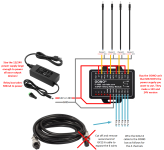
Wire up as follows using the devices above. Noting to NOT use the 5V output pin of the GX12-6 cable. And using a power supply that matches both the voltage you need on the output of the DC barrel plugs and matching the OONO relay version to that power supply as well. If you want to control something with a different voltage or supply type, just use the indiv relay outputs for that single channel, since each relay is isolated from each other. While the relays ARE rated for AC voltages, I would only recommend using these for DC switching applications unless you have exp with line voltages and correctly wiring them. The relays are good for up to 250VAC/10A or 30VDC/10A, which will cover most applications.
Disclaimer: I haven't tried this my self yet but in theory this should work as long as the noted items above are followed. As with any DIY projects, do this at your own risk.
What you will need:
- Either a GX12-6 cable you can cut/modify (like this one Amazon.com) or if you are good with soldering, a GX12-6 connector and some wire.
- OONO 4 channel relay module (Amazon.com) NOTE: this comes in 3 versions, 5V, 12V, and 24V. Buy the model that matches the voltage you need on your outputs. See note below.
- AC/DC Power supply. Either 12V or 24V based on your design (also make sure your OONO module matches the power supply needed). See below on capacity notes.
- DC Barrel Plug Pigtails. If you are powering devices that already use DC supplies, typically they mostly use 5.5x2.5mm or 5.5x2.1mm DC plugs. You can get both types from Amazon in pigtail format to easily wire into the relay module. They also make adapters that will plug into a 5.5x2.1mm that can adapt to a wire variety of other plug sizes. When looking for these cables, make sure to account for current needed for the device you are powering. The lower the wire gauge, the better. Find 18AWG or bigger (lower number) if possible.
OONO Modules:
This relay module is pretty handy. It comes in 3 voltage options for powering it. 5V, 12V, and 24V. Since it requires more power than the Hydros supplies on the 5V pin of the 0-10V port (needs 300mA while hydros only has 150mA), you WILL have to power it externally. But if you take advantage of the output voltage you need on the controlled outputs, you can reduce your need for separate supplies. For example if you have 4 JEBAO pumps that each use 24V supplies, just get 1 single 24V power supply with enough power capacity to drive all 4 pumps PLUS the 300mA of the module. To make things easier, if you can settle on 1 common output voltage for all 4 outputs (either 12V or 24V) it will make wiring much easier. This isn't a requirement but for this tutorial it is an assumption.
Also something to note, all 3 versions of this relay box accept a WIDE voltage range for the input control ports. So the full 0-10V output of the Hydros can easily be accepted into any of the 3 versions. Any voltage over 2.5V will trigger the relay output ON. Any voltage under 0.5V will turn them OFF. So when you go to make outputs in Hydros to control these relays make sure to set the OFF voltage to 0V and ON voltage to anything 3V or higher!
Power Supply:
As noted above, pick a voltage that is common for all your outputs. Then find a supply that has enough capacity for all the devices you are powering. IE if you have 4 pumps, and each of them use a 2A supply, get a single supply with atleast 8A. You may not be able to find larger capacity in standard sized power supplies and may have to go to more industrial type supplies. Meanwell makes some very reliable and robust AC/DC supplies and I suggest looking into them but they arent cheap typically.
Wire up as follows using the devices above. Noting to NOT use the 5V output pin of the GX12-6 cable. And using a power supply that matches both the voltage you need on the output of the DC barrel plugs and matching the OONO relay version to that power supply as well. If you want to control something with a different voltage or supply type, just use the indiv relay outputs for that single channel, since each relay is isolated from each other. While the relays ARE rated for AC voltages, I would only recommend using these for DC switching applications unless you have exp with line voltages and correctly wiring them. The relays are good for up to 250VAC/10A or 30VDC/10A, which will cover most applications.
Disclaimer: I haven't tried this my self yet but in theory this should work as long as the noted items above are followed. As with any DIY projects, do this at your own risk.