Command Bus Powered Probe Port Module(s)

Users Who Are Viewing This Thread (Total: 0, Members: 0, Guests: 0)

DigitaLSD

Member
Joined
Feb 4, 2024
Messages
32
Reaction score
7
Location
Kansas City
After some back and forth in other threads, reading in others, and my own experiences with Hydros, I have concluded that you need a low-cost module to add more Probe Ports. A simple block with port inputs powered by a command bus cable would be cheap and cost-effective for users to add more probes without buying a new 'brain' module. My specific use case would like one that has both pH and Conductivity/Salinity probe ports on it, but I would be most interested in the pH if we could only have one. This would allow users to pickup a Control X10, iV, and one of these expander modules and still perform Alk tests while receiving real-time pH from the sump. I am fairly certain the module could be created for far less than $100. The only way to currently get an additional pH probe is by buying a Control 3 for $200 and buying an additional probe, or a control 3 monitor pack for $300.
 
I'm no expert, but afaik, this should even be compatible with the sense port. I know there are claims that the hyrdos ph ports are super special isolated circuits, but for tank ph, +/-0.1ph should be good enough. completely understand needing high precision for the IV being used to test alk.
There is a saying, "there is quality we can make, and quality we can sell."

 
After some back and forth in other threads, reading in others, and my own experiences with Hydros, I have concluded that you need a low-cost module to add more Probe Ports. A simple block with port inputs powered by a command bus cable would be cheap and cost-effective for users to add more probes without buying a new 'brain' module. My specific use case would like one that has both pH and Conductivity/Salinity probe ports on it, but I would be most interested in the pH if we could only have one. This would allow users to pickup a Control X10, iV, and one of these expander modules and still perform Alk tests while receiving real-time pH from the sump. I am fairly certain the module could be created for far less than $100. The only way to currently get an additional pH probe is by buying a Control 3 for $200 and buying an additional probe, or a control 3 monitor pack for $300.
To communicate on the command bus the device has to be a controller. So it has to have the same microchip as the X3 and the X3 only has 1ph/ORP port and 2 sense ports. If you start adding more probe ports it would be more than the $300 of the X3. The X3 only is only $199 and not $300. A Digital Aquatic module with a single pH port was $150 and that was over 10 years ago.
 
To communicate on the command bus the device has to be a controller. So it has to have the same microchip as the X3 and the X3 only has 1ph/ORP port and 2 sense ports. If you start adding more probe ports it would be more than the $300 of the X3. The X3 only is only $199 and not $300. A Digital Aquatic module with a single pH port was $150 and that was over 10 years ago.
You did see where I said the X3 alone (Without probe) was $200, or the "Monitor Pack" which comes with a probe was $300, right?

Also, I see no reason that it should need to be a full on controller just to get extra probe ports, I am sure there is a simpler way around it.
 
You did see where I said the X3 alone (Without probe) was $200, or the "Monitor Pack" which comes with a probe was $300, right?

Also, I see no reason that it should need to be a full on controller just to get extra probe ports, I am sure there is a simpler way around it.
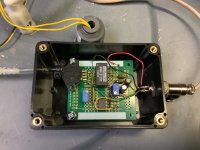
It has to be a controller to communicate on the command bus. The analog signal has to be converted to digital and then communicated to all the other controllers in the collective. So the microcontroller also has to have the hardware and communication protocol in it firmware to talk to the other controllers on a CAN bus system. It also has to have wifi and bluetooth communications protocol and hardware since each controller has to communicate to the cloud via wifi. That s how the firmware is updated. Also the bluetooth is required for the initial setup and as an emergency backup to wifi. Then it also has to have the hardware and firmware to retrieve the signal from the ports. I believe the use the same microchip in all the controllers. If they have to have all of that anyway just for a module then it might as well be a stand alone controller so it can be used stand alone or in a collective as part of a lager controller that is a sum of all the member controllers. I guess you could always make you on circuit and apply the signal to a 0-10v input on a X4 for an extra pH input, I have 3 water level sensors that I made that can tell the water level in my three reservoirs. It is shown as a percentage of full. I will attach a photo of the circuit, Also you can get a X3 controller only and a pH probe a lot cheaper than $300 since the monitor kit has a power supply, temp sensor and a leak detector that is not needed just for another pH probe to be hooked up.

IMG_3955.jpeg
 
Last edited:
It has to be a controller to communicate on the command bus. The analog signal has to be converted to digital and then communicated to all the other controllers in the collective. So the microcontroller also has to have the hardware and communication protocol in it firmware to talk to the other controllers on a CAN bus system. It also has to have wifi and bluetooth communications protocol and hardware since each controller has to communicate to the cloud via wifi. That s how the firmware is updated. Also the bluetooth is required for the initial setup and as an emergency backup to wifi. Then it also has to have the hardware and firmware to retrieve the signal from the ports. I believe the use the same microchip in all the controllers. If they have to have all of that anyway just for a module then it might as well be a stand alone controller so it can be used stand alone or in a collective as part of a lager controller that is a sum of all the member controllers. I guess you could always make you on circuit and apply the signal to a 0-10v input on a X4 for an extra pH input, I have 3 water level sensors that I made that can tell the water level in my three reservoirs. It is shown as a percentage of full. I will attach a photo of the circuit, Also you can get a X3 controller only and a pH probe a lot cheaper than $300 since the monitor kit has a power supply, temp sensor and a leak detector that is not needed just for another pH probe to be hooked up.

View attachment 4319

If the command bus itself can transmit data, there should be no reason that a simple pH probe port would need Bluetooth, wifi, or any other connectivity outside of the command bus wire. All communication should be able to be done from the main control brain unit to the ancillary device through that cable. It *should* be akin to plugging a mouse into a computer. Conversion of Analog signal input to Digital information that can be passed over the Command Bus may need some sort of processing unit, but it shouldn't be necessary to have one that is on par with the X3's own logic chip, as it simply doesn't warrant that amount of processing power, for example it doesn't need a SOC or however they're running their software, it should only need the ability to convert while the controller it's connected to handles all of the data, calibration, and limited firmware update. But I digress, I don't know enough about how the Hydros controller run internally to say that with any certainty, so maybe you're right. However, the fact that it can (as you've illustrated) be done with a 0-10v port means that it can be done in some way shape or form, and CoralVue could just do it that way. It's probably not outside the scope completely of my DIY skills, I've done a few R-Pi projects of varying complexities, so I could probably figure it out, but, since I'm lazy, it wouldn't have the same build quality as the rest of the Hydros equipment, lol.

as for the price, I am already aware you don't need those things for a simple pH port, so spending $300 for the monitor kit makes it not seems as worth it, but spending $200 (Plus a $40 probe) for something and only utilizing a single port on it also makes very little sense to me. By the time you buy a pH probe and a Command Bus cable, you're already at $246, which isn't all that far away from $300.

 
If the command bus itself can transmit data, there should be no reason that a simple pH probe port would need Bluetooth, wifi, or any other connectivity outside of the command bus wire. All communication should be able to be done from the main control brain unit to the ancillary device through that cable. It *should* be akin to plugging a mouse into a computer. Conversion of Analog signal input to Digital information that can be passed over the Command Bus may need some sort of processing unit, but it shouldn't be necessary to have one that is on par with the X3's own logic chip, as it simply doesn't warrant that amount of processing power, for example it doesn't need a SOC or however they're running their software, it should only need the ability to convert while the controller it's connected to handles all of the data, calibration, and limited firmware update. But I digress, I don't know enough about how the Hydros controller run internally to say that with any certainty, so maybe you're right. However, the fact that it can (as you've illustrated) be done with a 0-10v port means that it can be done in some way shape or form, and CoralVue could just do it that way. It's probably not outside the scope completely of my DIY skills, I've done a few R-Pi projects of varying complexities, so I could probably figure it out, but, since I'm lazy, it wouldn't have the same build quality as the rest of the Hydros equipment, lol.

as for the price, I am already aware you don't need those things for a simple pH port, so spending $300 for the monitor kit makes it not seems as worth it, but spending $200 (Plus a $40 probe) for something and only utilizing a single port on it also makes very little sense to me. By the time you buy a pH probe and a Command Bus cable, you're already at $246, which isn't all that far away from $300.
Hydros probe ports are not just "simple pH ports". They are specifically designed circuits for Hydros that include additional circuitry to provide air gap isolation from other electrical interference. This is done both on the data and power planes. This has a factor in the cost of a probe port.
 
Hydros probe ports are not just "simple pH ports". They are specifically designed circuits for Hydros that include additional circuitry to provide air gap isolation from other electrical interference. This is done both on the data and power planes. This has a factor in the cost of a probe port.
Sure... But if they can do a probe port, 2 sense ports, and 2 command bus ports, plus power and Wi-Fi etc, for $200, it stands to reason they could do a single probe port, and single command bus port, without any frills for cheaper... No?
 
Sure... But if they can do a probe port, 2 sense ports, and 2 command bus ports, plus power and Wi-Fi etc, for $200, it stands to reason they could do a single probe port, and single command bus port, without any frills for cheaper... No?

No Bluetooth? No way to register and add to the collective? No wifi? How does it communicate? Main control brain? Goes against the whole Hydros distributed control/redundancy principal. Control with probe port only? You still need printed circuit board, power source, command bus to communicate with other Hydros devices and the resistors, capacitors, inductors, diodes and transistors to facilitate power and communication. So you've got the majority of X3 already. Pulling sense ports results in a different form factor, different front panel ports, different enclosure. When said and done, this pH contol probably does have fewer components and may actually be modestly less to build and assemble. Savings then eaten up by packaging, stocking, marketing, supporting and sparing an inconsistent and overlapping control that is only marginally less or more likely equal to a X3. It all adds up to economies of scale and little incentive to build.
 
No Bluetooth? No way to register and add to the collective? No wifi? How does it communicate? Main control brain? Goes against the whole Hydros distributed control/redundancy principal. Control with probe port only? You still need printed circuit board, power source, command bus to communicate with other Hydros devices and the resistors, capacitors, inductors, diodes and transistors to facilitate power and communication. So you've got the majority of X3 already. Pulling sense ports results in a different form factor, different front panel ports, different enclosure. When said and done, this pH contol probably does have fewer components and may actually be modestly less to build and assemble. Savings then eaten up by packaging, stocking, marketing, supporting and sparing an inconsistent and overlapping control that is only marginally less or more likely equal to a X3. It all adds up to economies of scale and little incentive to build
jfc... some of you people with the "HYDROS Expert" badge have some sort of superiority complex, lack manners, and need to learn how to talk to people...

Not every piece of equipment needs to be a full-blown controller; that adds unnecessary costs and unnecessary waste. What I am proposing here is a quick, easy, and cheap way to add additional probe ports. I don't care how it happens, I proposed an idea to use the command bus to both communicate with and power the device since command bus can carry power. If that can't work for whatever reason, then perhaps someone's suggestion of using the 0-10v could work, or converting/swapping over a sense port. I don't care how it happens, just that it *should* happen. Spending $200 + cost of probe JUST to get another port for monitoring is just silly and makes almost no sense... Look at the Profilux, it has add-on cards... to add isolated conductivity and pH probe ports costs $103. There's no reason that CoralVue couldn't do something similar within the current Hydros ecosystem utilizing spare ports on their current controllers... Why on earth do you guys want to make something so simple so complex?

If a command bus can carry both power and data, then there should be no reason to make it as complex as any of you are suggesting... Again, think of it like plugging a mouse into a computer... easy, simple, works...
 
jfc... some of you people with the "HYDROS Expert" badge have some sort of superiority complex, lack manners, and need to learn how to talk to people...

Not every piece of equipment needs to be a full-blown controller; that adds unnecessary costs and unnecessary waste. What I am proposing here is a quick, easy, and cheap way to add additional probe ports. I don't care how it happens, I proposed an idea to use the command bus to both communicate with and power the device since command bus can carry power. If that can't work for whatever reason, then perhaps someone's suggestion of using the 0-10v could work, or converting/swapping over a sense port. I don't care how it happens, just that it *should* happen. Spending $200 + cost of probe JUST to get another port for monitoring is just silly and makes almost no sense... Look at the Profilux, it has add-on cards... to add isolated conductivity and pH probe ports costs $103. There's no reason that CoralVue couldn't do something similar within the current Hydros ecosystem utilizing spare ports on their current controllers... Why on earth do you guys want to make something so simple so complex?

If a command bus can carry both power and data, then there should be no reason to make it as complex as any of you are suggesting... Again, think of it like plugging a mouse into a computer... easy, simple, works...

You concluded that people should be able to arbitrarily throw something together, connect it to the command bus and it should "automagically" work without any consideration as to how to make that happen. Let's take a closer look at your Profilux example for instance, sure you can get an add on for $100. But is the add on alone anything more than a $100 paperweight? Nope. You need the Profilux controller at $750+ or the expansion box at $400 to facilitate power and communications. The whole cheap and cost effective without buying a brain argument is invalid from the start. You already purchased the brain--the single point of failure brain I might add--at a significantly higher entry cost than Hydros. And there are several combinations of Hydros controls that'll give you multiple pH ports. There is no need to get all bent out of shape when people suggest it probably isn't cost effective to build a cheap add on point solution that overlaps with several other controls when your own cheap add on example already clearly illustrates it is anything but.
 
You concluded that people should be able to arbitrarily throw something together, connect it to the command bus and it should "automagically" work without any consideration as to how to make that happen. Let's take a closer look at your Profilux example for instance, sure you can get an add on for $100. But is the add on alone anything more than a $100 paperweight? Nope. You need the Profilux controller at $750+ or the expansion box at $400 to facilitate power and communications. The whole cheap and cost effective without buying a brain argument is invalid from the start. You already purchased the brain--the single point of failure brain I might add--at a significantly higher entry cost than Hydros. And there are several combinations of Hydros controls that'll give you multiple pH ports. There is no need to get all bent out of shape when people suggest it probably isn't cost effective to build a cheap add on point solution that overlaps with several other controls when your own cheap add on example already clearly illustrates it is anything but.
What part about ADD another pH port (to an existing Hydros Controller unit) are you failing to understand? I've already purchased a Control interface, I want to add another pH port or Conductivity probe port, or both, via the command bus cable (Or really any free port). My equivalence was if you have a GHL Profilux 4, you can buy 2 extra ports for $103. I think it's perfectly reasonable to assume that Hydros should be able to accomplish the same thing... Also, I am not getting "bent out of shape" because you suggest "it isn't cost-effective." Read the entire first part of your post over again; you sound like you're talking down to someone, when you really shouldn't be. I've explained myself on here more than once, and yet somehow you're still under the impression that I want to buy a pH probe without a brain, when what I have suggested from the get go is an ancillary device that communicates with a brain via the command bus... This either shows a severe lack of reading comprehension on your part, or some absurd need on your part to always be right... please stop replying if all you're going to do is be obtuse
 
What part about ADD another pH port (to an existing Hydros Controller unit) are you failing to understand? I've already purchased a Control interface, I want to add another pH port or Conductivity probe port, or both, via the command bus cable (Or really any free port). My equivalence was if you have a GHL Profilux 4, you can buy 2 extra ports for $103. I think it's perfectly reasonable to assume that Hydros should be able to accomplish the same thing... Also, I am not getting "bent out of shape" because you suggest "it isn't cost-effective." Read the entire first part of your post over again; you sound like you're talking down to someone, when you really shouldn't be. I've explained myself on here more than once, and yet somehow you're still under the impression that I want to buy a pH probe without a brain, when what I have suggested from the get go is an ancillary device that communicates with a brain via the command bus... This either shows a severe lack of reading comprehension on your part, or some absurd need on your part to always be right... please stop replying if all you're going to do is be obtuse

You've explained nothing. You:ve said several times you want to plug something into to the command bus, it should automagically work and you don't want to pay for it. No consideration whatsoever given power, communications and configuration. Just Frankenstein a GX12 to a pH probe removing all that "unnecessary" fluff. And do it on the cheap. Here's an idea... How about you draw up a design with your kid's menu and crayons, have mom order up parts off AliExpress, you cobb it together with wire nuts and masking tape then test and let us know how it works?

News flash. You've suggested removing everythiing which actually makes it work in order to do it on the cheap. Then become angry, upset or agitated when people mention that oversight. That's the very definition of bent out of shape. What is your problem? Do you need a hug? Or just a Time Out to settle down and learn how to talk to people?
 
Last edited:
You've explained nothing. You:ve said several times you want to plug something into to the command bus, it should automagically work and you don't want to pay for it.
Umm, a BUS is a communications interface between devices, will there be some coding involved on the back end? Yes, most likely. When did I ever say I don't want to pay for something? Do you see here where your condescension is coming in?
No consideration whatsoever given power, communications and configuration.
a BUS is a communications port allowing communications between devices, including ancillary devices, this is why Mice, Keyboards, and Printers operate on a Universal Serial Bus controller... They're also powered by them in the case of Keyboards and Mice, and guess what? The Command Bus is built for communication AND power.
Just Frankenstein a GX12 to a pH probe removing all that "unnecessary" fluff. And do it on the cheap.
If the Command bus is capable of providing both power and data communication (as is advertised), just like a USB port, or a PCI-E slot, or RAM slots, or any number of other ports, slots, and connectors on a computer, then I see no reason to believe it is incapable of being used like any other BUS port on any other computer/smart device. But again, It doesn't have to be through the BUS port, this was just an idea for a quick, easy, and cheaper way of getting another pH probe or conductivity probe port, or both, relying on my understanding of the Command Bus system. As a user has already pointed out above, it could be done through a 0-10v port. He claims in order for a device to communicate on Command Bus it has to be a full-blown controller, and I already said, I don't know enough to know whether or not that's true, but even using something else like the 0-10v control port, as they suggested, could be an idea for Coral Vue to offer low-cost expansion ports.
Here's an idea... How about you draw up a design with your kid's menu and crayons, have mom order up parts off AliExpress, you cobb it together witb wire nuts and masking tape then test and let us know how it works?

News flash. You've suggested removing everythiing which actuall makes it work in order to do it on the cheap. Then become angry, upset or agitated when people mention that oversiggt. That's the very definition of bent out of shape. What is your problem? Do you need a hug? Or just a Time Out to settle down and learn how to talk to people?
And again, your condescension... This forum "New Features/Equipment Requests" is just that, it's a place for people to request something, it's not up to you, an end user, to say what can and cannot be done, it's up to Coral Vue to do so. Your arrogance throughout this entire forum (not just this post) is astounding. You jump to conclusions, you make assumptions, and you are condescending to people you talk to. I'm officially done with you, I am going to place you on ignore since you bring no value to conversations and just pessimism and condescension... have a nice life
 
Just wanted to help fill in some information about some more of the technical side of Hydros and why or what design decisions were made to this point.

Just to give you some background information on what the hydros command bus is and how it works. The Command Bus is actually a low speed but high reliability communication bus that uses the CANBUS standard electrically, the data protocol on top of that electrical standard is more of a hydros thing. This standard allows for multiple "talkers" and "listeners" on a common line, typically everyone on the line needs to negotiate with other endpoints to allow them to talk on the line. This is where the the whole collective "primary" and "secondary" devices comes into play. To play nice on the command bus, a device has to have some smarts to work the protocol. This is why all Hydros devices themselves use a microcontroller to interface to this bus. Only critical real time info is sent over this bus to link all controllers to the same status. That's where the high reliability portion really becomes a benefit, but it also doesnt have alot of data bandwidth either. Thats another reason why every hydros controller itself is connected via wifi, that provides the higher bandwidth path for data display and also firmware updates. So while there are other bus protocols that are more suited for peripheral devices, canbus isn't well suited for this and esp with how the current hydros protocol is designed.

The main reason that Hydros uses a microprocessor per module/brain is actually to cut down on development and maint costs in the long run. There is actually only one firmware/software that is used on ALL Hydros devices, and most of the programming is shared across devices. This cuts down greatly on engineering costs as devices need to be updated, tested, and released. The re-use portion also allows them to scale to new devices much quicker and cheaper than if they were starting from scratch. This commonality is the core to the hydros design methodology and why you will likely see most products follow this model. In the long run it helps manage re-occurring engineering, support, and production costs, and a small product like this needs to keep its running costs manageable to ensure re-investment into newer products as well as continued life.

Just some background on a couple points that I can provide insight into.
 
If you really want to try and add pH port and have a 0-10v input free on one of your controllers you can try the 0-10v version of one of these which is just pH and temp since it has compensation but it would require another 0-10v input for the temp. But this is not much cheaper than a X3 and would require some time to get it setup and working. Not sure how good these are since I have never tried. If I need more pH ports I get a Hydros controller that has one and I add it to my collective. It is not worth going to all the effort for the price difference.

 
If you really want to try and add pH port and have a 0-10v input free on one of your controllers you can try the 0-10v version of one of these which is just pH and temp since it has compensation but it would require another 0-10v input for the temp. But this is not much cheaper than a X3 and would require some time to get it setup and working. Not sure how good these are since I have never tried. If I need more pH ports I get a Hydros controller that has one and I add it to my collective. It is not worth going to all the effort for the price difference.

I was actually just looking at this unit! they are on ali-e as well for lower if needed
 
Just wanted to help fill in some information about some more of the technical side of Hydros and why or what design decisions were made to this point.

Just to give you some background information on what the hydros command bus is and how it works. The Command Bus is actually a low speed but high reliability communication bus that uses the CANBUS standard electrically, the data protocol on top of that electrical standard is more of a hydros thing.
can you elaborate on that? I am familiar with CANBUS as a whole, I am less familiar with it's application in Hydros, but many cars work off of CANBUS and I spent my youth as a car tuner.
This standard allows for multiple "talkers" and "listeners" on a common line, typically everyone on the line needs to negotiate with other endpoints to allow them to talk on the line. This is where the the whole collective "primary" and "secondary" devices comes into play. To play nice on the command bus, a device has to have some smarts to work the protocol. This is why all Hydros devices themselves use a microcontroller to interface to this bus. Only critical real time info is sent over this bus to link all controllers to the same status. That's where the high reliability portion really becomes a benefit, but it also doesnt have alot of data bandwidth either. Thats another reason why every hydros controller itself is connected via wifi, that provides the higher bandwidth path for data display and also firmware updates. So while there are other bus protocols that are more suited for peripheral devices, canbus isn't well suited for this and esp with how the current hydros protocol is designed.
Hmm... Ok, I *think* I follow here, but I am still a bit unclear on the "why". As stated, plenty of cars use CANBUS to integrate with their computers, you can have something as complex as a computer designed to retrieve, clear, and upload changes to the firmware, or you can have something as simple as a read-only data logger for things like insurance good driver programs. So I am unclear as to why you feel it's poorly suited to a low voltage low bandwidth requirement like a pH probe port or conductivity probe port. Could you try and expand on some of that?
The main reason that Hydros uses a microprocessor per module/brain is actually to cut down on development and maint costs in the long run. There is actually only one firmware/software that is used on ALL Hydros devices, and most of the programming is shared across devices. This cuts down greatly on engineering costs as devices need to be updated, tested, and released. The re-use portion also allows them to scale to new devices much quicker and cheaper than if they were starting from scratch. This commonality is the core to the hydros design methodology and why you will likely see most products follow this model. In the long run it helps manage re-occurring engineering, support, and production costs, and a small product like this needs to keep its running costs manageable to ensure re-investment into newer products as well as continued life.
See, this makes sense on a surface/cursory level to me, but I still am having a hard time understanding why full controller bodies (such as the X3, X4, X10, etc) couldn't have "drivers" for their software, allowing the ushering in of low-cost expansion products that use the command bus protocols. Instead of needing firmware updates, you would get driver updates to the Hydros OS in the main controllers that use the ancillary/peripheral devices. On paper it makes sense to me, it's just a different way of doing things, if this is impossible can you try and articulate why?
Just some background on a couple points that I can provide insight into.
I appreciate it. This was pretty thorough.
 
If you really want to try and add pH port and have a 0-10v input free on one of your controllers you can try the 0-10v version of one of these which is just pH and temp since it has compensation but it would require another 0-10v input for the temp. But this is not much cheaper than a X3 and would require some time to get it setup and working. Not sure how good these are since I have never tried. If I need more pH ports I get a Hydros controller that has one and I add it to my collective. It is not worth going to all the effort for the price difference.

I mean, when you say "Not much cheaper than an X3", it's about $100 cheaper than an X3. An X3, for $200, doesn't come with a pH probe, so all in cost for one is $246 ($200 for X3, $40 for probe, $6 for command bus cable), not including taxes and shipping. Your link is only $147 and comes with a probe, so it is a pretty significant savings. I will consider this for sure.
 
If you really want to try and add pH port and have a 0-10v input free on one of your controllers you can try the 0-10v version of one of these which is just pH and temp since it has compensation but it would require another 0-10v input for the temp. But this is not much cheaper than a X3 and would require some time to get it setup and working. Not sure how good these are since I have never tried. If I need more pH ports I get a Hydros controller that has one and I add it to my collective. It is not worth going to all the effort for the price difference.

You can find the exact module for like $40 on aliexpress. Looks pretty 💩 tbh though.
 
Back
Top