Coral Spawning with Hydros

  • Thread starter Thread starter MikeB
  • Start date Start date
  • Tagged users None

Users Who Are Viewing This Thread (Total: 0, Members: 0, Guests: 0)

MikeB

New member
Joined
Nov 10, 2021
Messages
3
Reaction score
2
Location
Winterville, NC, USA
Hi,

I have spent the last year with my 6 year old 65 gallon main system set up to hopefully trigger a coral spawn using Apex. That came to a screeching halt this week when I tried to alter the Apex local time manually and inadvertently crashed/locked up the Apex for 48 hours, during which a combination of hypoxia and a heater stuck on max killed all of my mature colonies. The response I received from Apex support was that "this doesn't happen 99% of the time, you shouldn't have tried to change the time without knowing what you're doing" to paraphrase. While I do accept responsibility for this disaster, I'm admittedly concerned about an operating system/reef computer that locks up (unresponsive to multiple reboots) if you push the wrong button.

I intend to continue to pursue home coral spawning. It's an awesome thing to try and is within hobbyist range to do. Scientists are doing this all over the world literally using the same equipment we use to grow corals in our tanks at home. No special equipment is required, just patience and lots of stability.

I have been building a 4' x 8' 320 gallon trough coral grow-out system for the past 3 months. My mature colonies were slated to move to this tank in a few months. I had planned to run this under Apex control, but obviously have some misgivings about that. Now I am looking to see if Hydros would be an option.

To trigger spawning, you need the following:

1) Moonlight simulation (preferably with 4100K warm white diodes instead of the 470 nm blue that Apex uses). This included moonrise/moonset and new moon programming.
2) Seasonal water temperature variation that changes on a linear monthly basis throughout the year. Convincing corals that they are actually in the ocean requires imitating ocean temperature swings (roughly 76 F to 85 F depending on month/season). Once temperatures reach about 81.5 F, corals are more likely to spawn. Daily temperature cycling including daily day/night temperature changes of ~1-2 degrees may also be important.
3) Sunrise/sunset programming.
4) Light intensity modulation per month. Solar intensity over reefs varies on a monthly basis throughout the year.

Corals spawn when a specific set of conditions are reached involving temperature, days after the full moon, and time after sunset. It is so predictable that charts are made of the Great Barrier Reef and Caribbean coral spawn times down to the exact time and date. Following these rules is how coral spawning in aquaria has been triggered by scientists to date.


So after all of that diatribe, is this something that could be added to Hydros programming? If so, I will happily test it for you.

Thanks in advance,

Mike
 
Do you have the X4 controller? It has 4 0-10v outputs that can possibly control an LED supply, but that would be a DIY project.
 
Hi,

I have spent the last year with my 6 year old 65 gallon main system set up to hopefully trigger a coral spawn using Apex. That came to a screeching halt this week when I tried to alter the Apex local time manually and inadvertently crashed/locked up the Apex for 48 hours, during which a combination of hypoxia and a heater stuck on max killed all of my mature colonies. The response I received from Apex support was that "this doesn't happen 99% of the time, you shouldn't have tried to change the time without knowing what you're doing" to paraphrase. While I do accept responsibility for this disaster, I'm admittedly concerned about an operating system/reef computer that locks up (unresponsive to multiple reboots) if you push the wrong button.

I intend to continue to pursue home coral spawning. It's an awesome thing to try and is within hobbyist range to do. Scientists are doing this all over the world literally using the same equipment we use to grow corals in our tanks at home. No special equipment is required, just patience and lots of stability.

I have been building a 4' x 8' 320 gallon trough coral grow-out system for the past 3 months. My mature colonies were slated to move to this tank in a few months. I had planned to run this under Apex control, but obviously have some misgivings about that. Now I am looking to see if Hydros would be an option.

To trigger spawning, you need the following:

1) Moonlight simulation (preferably with 4100K warm white diodes instead of the 470 nm blue that Apex uses). This included moonrise/moonset and new moon programming.
2) Seasonal water temperature variation that changes on a linear monthly basis throughout the year. Convincing corals that they are actually in the ocean requires imitating ocean temperature swings (roughly 76 F to 85 F depending on month/season). Once temperatures reach about 81.5 F, corals are more likely to spawn. Daily temperature cycling including daily day/night temperature changes of ~1-2 degrees may also be important.
3) Sunrise/sunset programming.
4) Light intensity modulation per month. Solar intensity over reefs varies on a monthly basis throughout the year.

Corals spawn when a specific set of conditions are reached involving temperature, days after the full moon, and time after sunset. It is so predictable that charts are made of the Great Barrier Reef and Caribbean coral spawn times down to the exact time and date. Following these rules is how coral spawning in aquaria has been triggered by scientists to date.


So after all of that diatribe, is this something that could be added to Hydros programming? If so, I will happily test it for you.

Thanks in advance,

Mike
Hi Mike,

Hydros already has the "Latitude" lighting control mode which allows you to specify a Longitude and Latitude and it will then vary your main lights according to the sunrise / sunset schedule for that part of the world. So that handles request 3 and 4 very nicely. A Moon schedule is on our list of projects and won't be difficult. I hadn't thought about a variable heater like you describe but it seems like a good idea to me. I would like to get with some of the other people here at CoralVue and look into this, but not of it is difficult at all for us to do.

Don
 
Don,

Thank you for getting back to me so quickly. Does the "Latitude" feature also vary light intensity on a monthly basis? This is something that the Apex does not currently do and would be very helpful.

Critical thing with the moonlights is color temperature (the moon is actually 4100 K corresponding to a warm to neutral white LED) and intensity. Too bright and it becomes a negative. Perhaps you can tie your moonlight schedule to your Latitude feature so it all comes as a packaged data set? I was using St. Croix in my simulation as a complete data set was available and it was close to my time zone.

Apex has the user set an average monthly temperature for each month of the year and then linearly changes tank temperature month-to-month based on this. Despite all of the internet hysteria that corals must be at 78-80 F or perish, my corals didn't even blink going from a low of 76 (during the day, 74.5 F at night) in February to 83.5 F in August. I programmed a daily temperature flux (arbitrarily set to start at 6 pm) to simulate nightly water cooling at night, which is typically 1-2 degrees F.

Obviously for a high stakes thing like coral spawning, the operating system/controller needs to be bullet proof (and idiot proof in my case). I am excited to see what Hydros can do!

Mike
 
Mike, I am going to set up a private conversation with me, you and some others here at CoralVue. Lets get into the details of this offline. I think this is a pretty cool project.
 
Hi,

I have spent the last year with my 6 year old 65 gallon main system set up to hopefully trigger a coral spawn using Apex. That came to a screeching halt this week when I tried to alter the Apex local time manually and inadvertently crashed/locked up the Apex for 48 hours, during which a combination of hypoxia and a heater stuck on max killed all of my mature colonies. The response I received from Apex support was that "this doesn't happen 99% of the time, you shouldn't have tried to change the time without knowing what you're doing" to paraphrase. While I do accept responsibility for this disaster, I'm admittedly concerned about an operating system/reef computer that locks up (unresponsive to multiple reboots) if you push the wrong button.

I intend to continue to pursue home coral spawning. It's an awesome thing to try and is within hobbyist range to do. Scientists are doing this all over the world literally using the same equipment we use to grow corals in our tanks at home. No special equipment is required, just patience and lots of stability.

I have been building a 4' x 8' 320 gallon trough coral grow-out system for the past 3 months. My mature colonies were slated to move to this tank in a few months. I had planned to run this under Apex control, but obviously have some misgivings about that. Now I am looking to see if Hydros would be an option.

To trigger spawning, you need the following:

1) Moonlight simulation (preferably with 4100K warm white diodes instead of the 470 nm blue that Apex uses). This included moonrise/moonset and new moon programming.
2) Seasonal water temperature variation that changes on a linear monthly basis throughout the year. Convincing corals that they are actually in the ocean requires imitating ocean temperature swings (roughly 76 F to 85 F depending on month/season). Once temperatures reach about 81.5 F, corals are more likely to spawn. Daily temperature cycling including daily day/night temperature changes of ~1-2 degrees may also be important.
3) Sunrise/sunset programming.
4) Light intensity modulation per month. Solar intensity over reefs varies on a monthly basis throughout the year.

Corals spawn when a specific set of conditions are reached involving temperature, days after the full moon, and time after sunset. It is so predictable that charts are made of the Great Barrier Reef and Caribbean coral spawn times down to the exact time and date. Following these rules is how coral spawning in aquaria has been triggered by scientists to date.


So after all of that diatribe, is this something that could be added to Hydros programming? If so, I will happily test it for you.

Thanks in advance,

Mike


Mike that is pretty cool and well with in the grasp of a hobbyist.
I have had corals spawn and anemones.
Anemones actually used to do it regularly.
For me it happened just as the flow pumps went off for the night.
I still had main pump on a sea swirl so it still had some lite flow with the flow pumps off. The tank was smaller 40 gallon breeder.
I am sure it has something to do with moon phase too but flow was the key for timing when they actually happened. Tropics sun is pretty much the same year around. I didn't run a moonlight but there was probably enough getting into the room at night.
This went on for a while. I wish I would have logged it. First time I thought it was a fluke and actually was talking with Eric Borenmann at the time. He was like take some pictures.

Be careful with moonlight because most leds I think are too bright. Moon light should be a lite glow. Use led indirectly.
 
Last edited:
David,

That's awesome! Coral spawning is primarily tied to days after the full moon, time after sunset, and water temperature, although a variety of additional factors such as turbidity also come into play. You are right that most moonlights are too bright and should be less than 0.5 lux to accurately simulate the moon.

Mike
 
Very cool ideas. It's not just corals that breed in response to seasonal changes of photo period, temperature and moon phase. I think any of us using such options are likely to see an increase in breeding events in a variety of species. In the lab we typically adjust heater/chiller settings and light timers manually, so I expect a number of research labs could find this useful.

Cheers,
Bill
 
David,

That's awesome! Coral spawning is primarily tied to days after the full moon, time after sunset, and water temperature, although a variety of additional factors such as turbidity also come into play. You are right that most moonlights are too bright and should be less than 0.5 lux to accurately simulate the moon.

Mike
Rebooting this post as I just asked about this exact same thing in the hydros community Facebook group.
Has or did anything come of this?? I’m wanting to go with a set of Philips Coral Care lights for my 310 gallon build for the reason it connects with hydros and I believe the quality is well above the rest. But no lunar mode like some of the other higher end fixtures. I’ve always loved the lunar lights just for the look of the tank after dark. But as I’ve began looking more into it, the realization of potential coral spawning as well.
I know that “other” brand controller has lunar led’s that follow a lunar schedule, but they technically need those led’s they come with to be swapped out for a more neutral white led near the 4100 kelvin range to have a realistic lunar/moonlight.

If hydros could build something like this similar to what that “other” brand controller has, I’d 100% be a buyer, even if they don’t take the time to follow a lunar schedule(even though that would be most ideal and most cool and beneficial for coral spawning purposes), even to just have a realistic “looking” lunar light that those of us could buy and plug into hydros for those of us running lights above our systems that don’t have lunar/moonlight capabilities. I’d love to see it and would be a buyer!
 
This hasn't been incorporated into the system yet but I have actually implemented the lunar schedule on it. I plan to add it to the production software by the end of the year.

Inititally though the LEDs themselves may be somewhat of a DIY item. The mounting requirements are so different from tank to tank it might be difficult to create a one size fits all approach. But Hydros can easily provide a 12V switched output that follows any desired schedule (like a lunar schedule). There are dozens of 12 V LED options out there from standard suppliers.

Hopefully we will have our own hardware for this at some point. Any suggestions for a good general mounting technique?
 
This hasn't been incorporated into the system yet but I have actually implemented the lunar schedule on it. I plan to add it to the production software by the end of the year.

Inititally though the LEDs themselves may be somewhat of a DIY item. The mounting requirements are so different from tank to tank it might be difficult to create a one size fits all approach. But Hydros can easily provide a 12V switched output that follows any desired schedule (like a lunar schedule). There are dozens of 12 V LED options out there from standard suppliers.

Hopefully we will have our own hardware for this at some point. Any suggestions for a good general mounting technique?
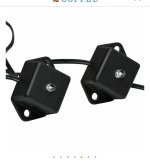
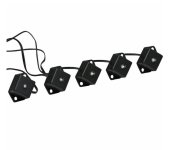
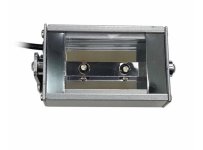
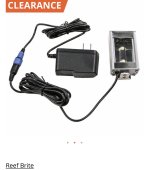
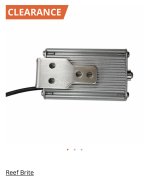
I’ve seen two different universal moonlight styles out there. Which is what brought me to thinking this could be a potentially cool idea for coralvue hydros to look into. One example being the “other” controllers lunar lights, which I personally feel has a better cleaner look than the other moonlights that are made by reefbrite, which I think the aluminum or whatever material they used causes it to stand out to the eye too much. But both would be universal mounting options. It would have to be marketed as something like coralvue hydros universal led lunar lights. The buyer would just have to understand they would have to come up with their own way to mount them. For those with canopy hoods or 8020 t-slot aluminum diy light supports or those hybrid light supports like the aquatic life t5-led hybrid light fixture would be relatively easy to mount either one of these styles to.

I’ve just read too many negative reviews about reefbrites magnum led lights to even consider theirs. Mainly people complaining about the color not at all being what they expected or wrong for proper moonlighting, or being so dim you can’t even tell the light is barely even on in the tank at night with lights out. I figure hydros could tap into a relatively untapped market with producing their own lunar lights with lunar schedule to market to anyone with hydros controllers and/or those with lights that don’t have moonlights or lunar schedules05DCDCEB-8B1D-43F2-A625-1EA8CA096444.jpeg05B79192-13F8-45F0-BFAA-E07A046C5D5C.jpeg47B9AAA4-797E-49AA-92E6-EAEB84519EE2.jpeg4C6FE8E8-BA01-4EBB-9434-10B0A05B16BB.jpeg34546A6D-FF89-4D76-A2EC-2E20048CA334.jpeg
 
I’ve seen two different universal moonlight styles out there. Which is what brought me to thinking this could be a potentially cool idea for coralvue hydros to look into. One example being the “other” controllers lunar lights, which I personally feel has a better cleaner look than the other moonlights that are made by reefbrite, which I think the aluminum or whatever material they used causes it to stand out to the eye too much. But both would be universal mounting options. It would have to be marketed as something like coralvue hydros universal led lunar lights. The buyer would just have to understand they would have to come up with their own way to mount them. For those with canopy hoods or 8020 t-slot aluminum diy light supports or those hybrid light supports like the aquatic life t5-led hybrid light fixture would be relatively easy to mount either one of these styles to.

I’ve just read too many negative reviews about reefbrites magnum led lights to even consider theirs. Mainly people complaining about the color not at all being what they expected or wrong for proper moonlighting, or being so dim you can’t even tell the light is barely even on in the tank at night with lights out. I figure hydros could tap into a relatively untapped market with producing their own lunar lights with lunar schedule to market to anyone with hydros controllers and/or those with lights that don’t have moonlights or lunar schedulesView attachment 2573View attachment 2574View attachment 2575View attachment 2576View attachment 2577

Can you use one of those IP67 LED strips, stuck in place on your existing light fixture? That may be easier than the pod style lights and provide more even coverage.
 
I was wondering how important it is for the moonliight to be dimmable? I have seen arguments that all you really need to do is vary the "on" time to correspond to moon rise and moonset throughout the 28 day cycle. Is it also necessary to vary the brightness to correspond to the amount of moon currently lit?
 
I was wondering how important it is for the moonliight to be dimmable? I have seen arguments that all you really need to do is vary the "on" time to correspond to moon rise and moonset throughout the 28 day cycle. Is it also necessary to vary the brightness to correspond to the amount of moon currently lit?
Me too. I have an old ‘dumb’ strip that I could manually dim/change to desired Lux and kelvin and use the hydros for the on/off
 
On the Digital Aquatics system it is dimmable but they use standard size 5mm LED which were two to a pod. I have one white pod and one blue pod and two red pods. The reds are mainly for turning up to 100% at night if I want to see in the tank. The brightnes max can be set but they are off for new moon and the light gradually increases up to the max setting for full moon. Of coarse the have a lunar module that is used to drive them. My guess is it is a PWM signal at the lights but these are low current LED's. Most commercial LED drivers are for higher current LED's. I was figuring a 0-10v output from Hydros to a LED drive that used the 0-10v to turn off and change intensity. The moon lights are still on my Archon. That is one of the last remaining things left on that controller.
 
I was wondering how important it is for the moonliight to be dimmable? I have seen arguments that all you really need to do is vary the "on" time to correspond to moon rise and moonset throughout the 28 day cycle. Is it also necessary to vary the brightness to correspond to the amount of moon currently lit?
I’m by no means a marine biologist but when I’ve read through multiple articles through a Google search I did of “when do corals spawn the most” . It was quickly apparent that really to get corals to spawn rely on a number of things, the few things that stood out to me was that it was based on the lunar cycle, typically occurring a few days after a full moon, a rise in sea surface temperatures, and seasonal length of daylight. All 3 could be imitated in the home aquarium, obviously getting corals to spawn I would say is very difficult and need near perfect water parameters, but it has been done as I mentioned earlier from a couple r2r forum threads I’ve seen.

But being as it seems the spawning events happen typically a few days after a full moon, I would think a lunar cycle imitating how at night during a full moon it’s brightest and a new moon it’s darkest, and so having the light brightness/intensity ramping up and down throughout the lunar cycle to emulate that I would assume be beneficial in tackling one key component of attempting to get corals to spawn.

But I’m by no means someone educated near enough to really know for certain. I’m more or less just going off of the several articles I read when googling “when do corals spawn”. For all I know I could be way off base, but it sounded logical to me.

If we could get a set of lunar lights that were dimmable and followed the lunar schedule, and the correct or close to that 4100kelvin lighting that would be incredible and something I think we could say we have that nobody else comes close to.

But hell, I’d be happy with just a simple lunar/moonlight leds that can operate off hydros that doesn’t even do any of that, just looks like realistic moonlight without the dimming or lunar cycle for simplicity sake. But if doable, I think would be amazing and I would and I would think many others would be a buyer.
 
This recent article out of Australia of these labs getting corals to spawn using artificial moonlight and the correct temperatures to repopulate the Great Barrier Reef kind of goes back to this whole topic and hopes of trying to get a Coralvue Hydros backed realistic lunar/moonlight that will be compatible with the Hydros controllers to further have something other controllers either already offer(and we could improve upon) or they don’t offer.

Scientists Breeding Corals for the Great Barrier Reef Achieved First-Ever Out-of-Season Spawning Event
 
Can we bring this back to life? There are some amazing corals coming out of Inter-Fish and Monsoon Aquatics now. Those of us with mature colonies should be able to accomplish this at home provided we can get the seasonal temps, and lighting (day and moon) programmed in our controllers.
 
Can we bring this back to life? There are some amazing corals coming out of Inter-Fish and Monsoon Aquatics now. Those of us with mature colonies should be able to accomplish this at home provided we can get the seasonal temps, and lighting (day and moon) programmed in our controllers.
I agree this would be a great selling feature for the product to have seasonal temp tables and length of day and moon cycles.
 
Can we bring this back to life? There are some amazing corals coming out of Inter-Fish and Monsoon Aquatics now. Those of us with mature colonies should be able to accomplish this at home provided we can get the seasonal temps, and lighting (day and moon) programmed in our controllers.
Absolutely! I’m still a huge supporter and would be buyer if we could get something to replicate proper moonlighting lumens/spectrum through some kind of led pods and lunar cycles through hydros to give a better chance at coral spawning, and to just help create an even more natural environment to our tanks. Plus the cool factor lol
 
Back
Top