Power supply redundancy - anyone addressed it?

Users Who Are Viewing This Thread (Total: 0, Members: 0, Guests: 0)

HaulinAshe

Member
Joined
Jan 21, 2021
Messages
73
Reaction score
19
Location
Dallas, NC
It's been my experience for many years that once any electronic device ages past a month or so without problems, by far the most likely failure will come from the power supply.

I understand how CAN bus systems operate, and I get the control redundancy available with a multi-controller setup such as Control-4 combined with Control-2 or Control-XS. I understand the ability to configure a collective with split power supplies, one for each controller. But has anyone looked into what it would take to have redundant power supplies for the same controller(s)?

After all, if I'm running split power supplies, one for the Control-4, one for the Control-XS, and the power supply for the Control-4 dies, isn't the Control-4 going down with it along with the probes and sensors connected to it?
 
Your experience must be very different from mine. I have never had a power supply fail on any device I've owned so I have never considered this to be an issue. Interesting thought though.
 
It's been my experience for many years that once any electronic device ages past a month or so without problems, by far the most likely failure will come from the power supply.

I understand how CAN bus systems operate, and I get the control redundancy available with a multi-controller setup such as Control-4 combined with Control-2 or Control-XS. I understand the ability to configure a collective with split power supplies, one for each controller. But has anyone looked into what it would take to have redundant power supplies for the same controller(s)?

After all, if I'm running split power supplies, one for the Control-4, one for the Control-XS, and the power supply for the Control-4 dies, isn't the Control-4 going down with it along with the probes and sensors connected to it?

I have had a few power supplier fail for me. Both my Vortech have had their power supplies fail plus a few other dc pump power supplies have failed on me too. I used to restore/repair classic full size coin op games and the first thing I did was rebuild the power supplies. It certainly does happen but for me but most of it has been pretty old stuff other than a couple of things. I am not sure how to run two power supplies on a controller even if it is possible. Interesting to see what others say.
 
Here you can find information about the HYDROS collective and how to use redundant power supplies in a collective.

 
Here you can find information about the HYDROS collective and how to use redundant power supplies in a collective.


Yea I think he meant more than one power supply to one unit like using a transfer switch type situation.
 
Hey, David several years back someone took Panasinic's electrolyte recipe and went to another capacitor manufacture and they started using it. The only problem Panasonic had deliberately left out a ingredient in the recipe. Thousands of caps were made and sold before it was caught. It took several years before failures. They ended up in a lot of power supplies from computers to other consumer devices. Also switch mode supplies are hard on the caps even with 105 degree rated caps they still fail quite often. I have replaced lots of them in VCR's and CD players and DVD players in several brands. The newer supplies though are not nearly as bad about this as they used to be A few years back.
 
Yea I think he meant more than one power supply to one unit like using a transfer switch type situation.
That's correct. In fact, my intent would be to provide rapid switchover (< 100ms) with a downstream diode-isolated tank circuit to cover the failover time. It shouldn't take much circuitry to accomplish it. Looks like I might as well integrate it all into a single power supply and battery backup solution. The lazy side of me was hoping someone had already done it!
 
Hey, David several years back someone took Panasinic's electrolyte recipe and went to another capacitor manufacture and they started using it. The only problem Panasonic had deliberately left out a ingredient in the recipe. Thousands of caps were made and sold before it was caught. It took several years before failures. They ended up in a lot of power supplies from computers to other consumer devices. Also switch mode supplies are hard on the caps even with 105 degree rated caps they still fail quite often. I have replaced lots of them in VCR's and CD players and DVD players in several brands. The newer supplies though are not nearly as bad about this as they used to be A few years back.

Yea in Pc's they failed allot. I think they were also used in some later year arcade games.
First thing I did when rebuilding power supplies is replace the capacitors back in the day. The really old ones were just dried out.
When the Chinese capacitors came on the market they were such garbage too.
 
Giving it some more thought, it may make more sense to build the power sensing/switching module as a bridging Command Bus Cable assembly between the two controllers. That would allow OEM power supplies to be used at each end of a 2+ controller bus, each power supply would function normally under normal conditions with no electrical connection between the two sides, then switch to powering both sides if either side of power fails.
 
Could it be done with a no/nc relay?
What does a ups use to go from normal power to backup power?
 
Could it be done with a no/nc relay?
What does a ups use to go from normal power to backup power?
It could be done with a relay, combined with a diode/capacitor combo to hold the voltage while the relay switches. I'd prefer something a bit more elaborate, possibly with overload and reverse polarity protection so that if one side had a catastrophic failure and was in a low-impedance/high-current state, the redundancy switchover would not attempt to fill that current void. It would be basically the same circuitry/logic required for UPS systems whereby they go "No-No" if the load conditions are beyond capacity.
 
While you can't run multiple standard supplies on the same command bus, you can actually run multiple Wave Engines on the same powered command bus. Internally they have the protection to drive the bus from multiple points.
 
Giving it some more thought, it may make more sense to build the power sensing/switching module as a bridging Command Bus Cable assembly between the two controllers. That would allow OEM power supplies to be used at each end of a 2+ controller bus, each power supply would function normally under normal conditions with no electrical connection between the two sides, then switch to powering both sides if either side of power fails.
Interesting idea. I've been considering a setup that replaces the power brick on the WE with a Mean Well HEP-240-24A 24V/10A power supply and a failover to a 24V battery for power outage protection.

This would provide power to the WE, which powers other Hydros controllers and also provide power to other 24V DC loads in my system like my dosing pumps, so I can eliminate those power bricks as well. I may also add a 24/12 step down to pick up some additional items that use 12V.

I know the WE has an automatic response with a 12V backup power source but I'd like to have a more proactive response that affects more than just pumps so I'd monitor for loss of the power supply, and have the controller setup the system for battery operation.

I'll end up with two of these systems since I'm splitting my power load across to AC circuits.

I had not considered trying to maintain the voltage level during switch over or other safety circuits you mentioned. Great idea that gives me something to research.

Thanks!
 
While you can't run multiple standard supplies on the same command bus, you can actually run multiple Wave Engines on the same powered command bus. Internally they have the protection to drive the bus from multiple points.
Is the ability to share power a function of the WE or is it something special about the power brick that powers the WE? I'm thinking about replacing the standard power brick with a somewhat larger 24V supply that I can use to run my WE pumps and also some other 24 loads.
 
Is the ability to share power a function of the WE or is it something special about the power brick that powers the WE? I'm thinking about replacing the standard power brick with a somewhat larger 24V supply that I can use to run my WE pumps and also some other 24 loads.
Its a function of the WE itself, it has an isolation circuit internally that prevents power from the command bus to back feed onto the WE power supply, but allows the WE supply to power the command bus. So yeah you are good to go ahead and replace it. I would suggest looking at Meanwell power bricks, thats what I have used with goodluck.
 
Thank you! I'm planning on using two Meanwell HEP-240-24 which is a 24V/10A power supply with IP67 rating to power two WE. I might end up going to the larger HEP-1000-24W if I end up getting lights that are also 24V.

Each power supply will be sourced from independent AC circuits. In the event of a loss of the power supply a relay will switch the WE over to a 24V DC backup.
 
Thank you! I'm planning on using two Meanwell HEP-240-24 which is a 24V/10A power supply with IP67 rating to power two WE. I might end up going to the larger HEP-1000-24W if I end up getting lights that are also 24V.

Each power supply will be sourced from independent AC circuits. In the event of a loss of the power supply a relay will switch the WE over to a 24V DC backup.
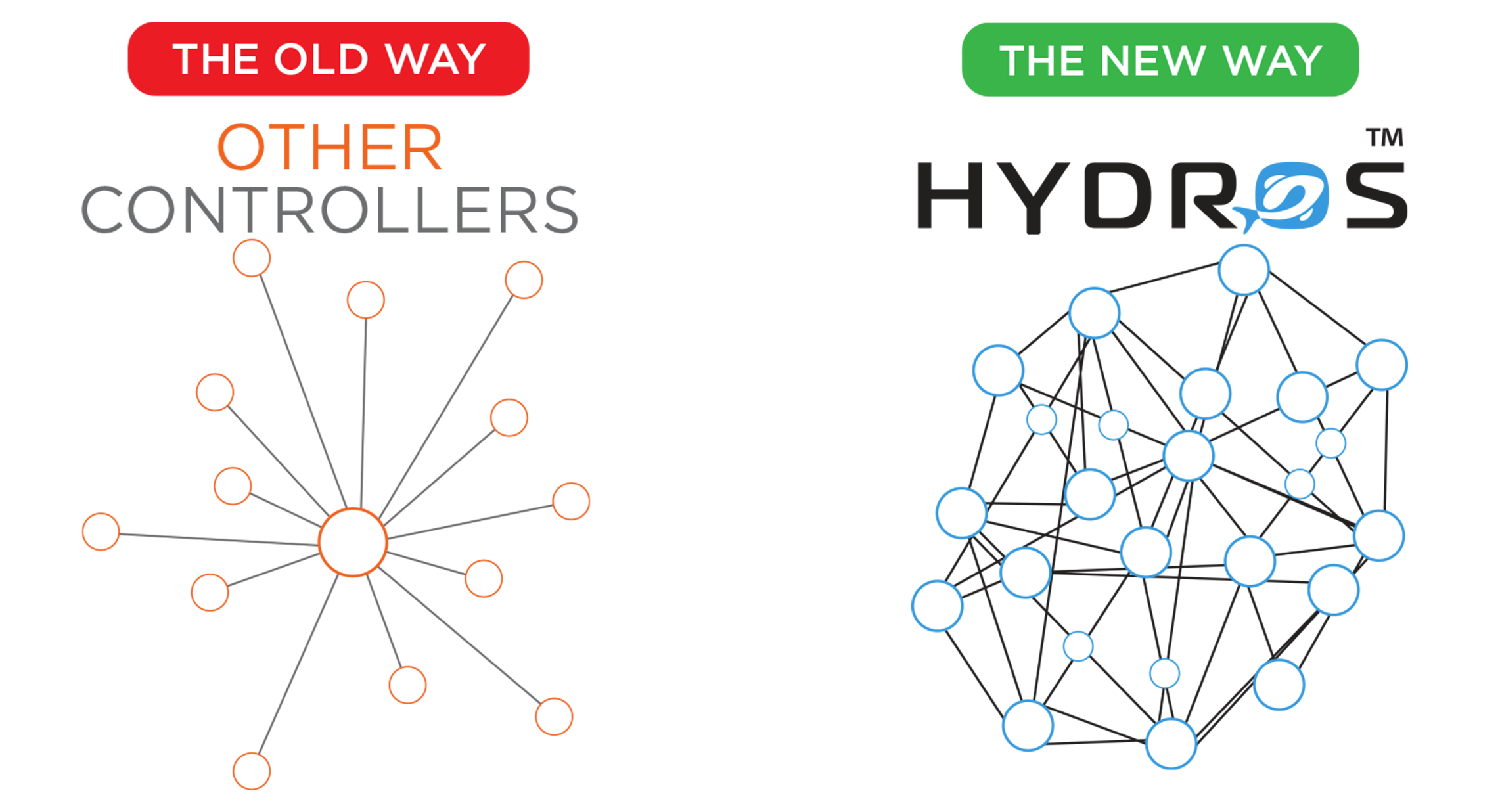
You could consider a simpler approach. If you have 2 wave engines run them each on their own power supply and hook all the command bus ports together with you other devices. If either power supply fails you only lose half of your flow pumps (the other WE still runs) and all of the other Hydros devices run as long as one of the two WEs is powered.
 
You could consider a simpler approach. If you have 2 wave engines run them each on their own power supply and hook all the command bus ports together with you other devices. If either power supply fails you only lose half of your flow pumps (the other WE still runs) and all of the other Hydros devices run as long as one of the two WEs is powered.
I do plan on connecting two x4 controllers between the two WE for power redundancy to the controllers. The reason for the battery is for total loss of AC. I considered running the WE power supplies from a 120V inverter off of the battery but the inverter has maybe an 85% conversion efficiency, compounding what I'm guessing is a 95% efficiency on the WE power brick. That means about 20% of my stored backup energy gets lost, so I decided to use a 48/24 buck converter with a 95% conversion efficiency to drop from the 48v battery down to the 24v needed by the WE if the power goes out. I will fire up the inverter if I need to add some heat to the system during a power outage.
 
That sounds like a good system. One thing I should let you know. All of the Hydros devices can run on 12V. As soon as the incoming power drops below 18V the whole Hydros system drops into low power mode. You can define ahead of time what all of your outputs do in low power mode.

The Wave Engine can still run your flow pumps in this mode, just not very fast. This is a great was to survive a power outage and maximize your run time. So you might want to consider using 12V batteries for your backup power source.
 
Thanks Don. I think the auto cutover to low power mode is a great feature, but it doesn't fit my situation because I want the option to run a Varios-4 return pump while on battery if I need to add heat to the system and that will not work at 12V.
 
Back
Top