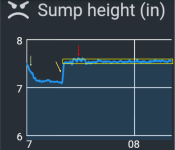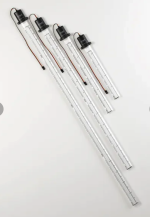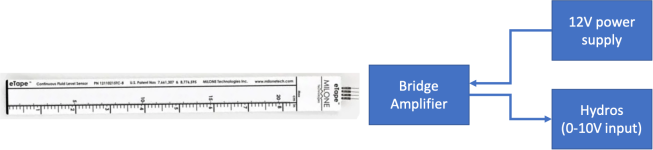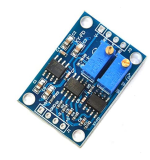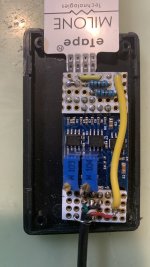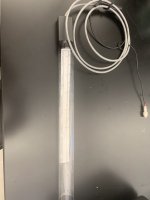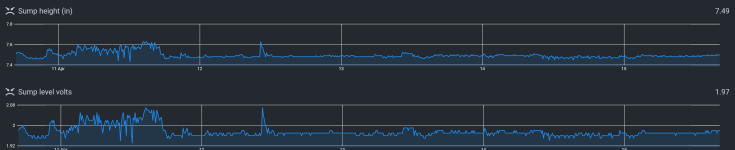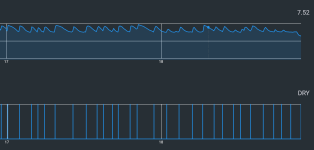
After posting some of this on Facebook, I was asked to start a thread here about my experiences with the Milone Technology Continuous water level sensors.
I will be adding to the thread here, but here is a little introduction.
Many types of water level detectors exist. Most however, have been discrete level detectors. More specifically, they function like a switch. If the water level is below the trigger level they turn on, and when they are above the trigger level they turn off. Many of these sensors use optics to determine water levels and they have to reside inside the tank. Newer sensors use ultrasound techniques to determine water levels and they can reside on the outside of a tank. Each of these sensors have advantages and disadvantages.
A much better way of controlling water level is by using a “continuous” water level sensor. These sensors are more like a ruler than like a switch, in that they provide a digital measure of water height. They are more advanced because they don’t just tell you the water level is low – they tell you how low the water level is. Imagine you are on vacation and your system tells you the water level is low in your tank. Wouldn’t it be great if it told you by “how much”? Such level sensors have existed for a while, but they have been fairly expensive and have been only infrequently used in the reefing hobby. As new piezo technologies evolved for measuring force and pressure, it opened the door for newer continuous water level sensors. One such device, eTape manufactured by Milone Technologies, measures continuous water level by sensing water pressure. This paper is all about how to interface this device to the Hydros control system manufactured by Coralvue.
Most of you reading this article are looking for the “pains” that are solved in using this device. Here is a running list that I created after I interfaced it successfully to the Hyrdros:
I will be adding to the thread here, but here is a little introduction.
Many types of water level detectors exist. Most however, have been discrete level detectors. More specifically, they function like a switch. If the water level is below the trigger level they turn on, and when they are above the trigger level they turn off. Many of these sensors use optics to determine water levels and they have to reside inside the tank. Newer sensors use ultrasound techniques to determine water levels and they can reside on the outside of a tank. Each of these sensors have advantages and disadvantages.
A much better way of controlling water level is by using a “continuous” water level sensor. These sensors are more like a ruler than like a switch, in that they provide a digital measure of water height. They are more advanced because they don’t just tell you the water level is low – they tell you how low the water level is. Imagine you are on vacation and your system tells you the water level is low in your tank. Wouldn’t it be great if it told you by “how much”? Such level sensors have existed for a while, but they have been fairly expensive and have been only infrequently used in the reefing hobby. As new piezo technologies evolved for measuring force and pressure, it opened the door for newer continuous water level sensors. One such device, eTape manufactured by Milone Technologies, measures continuous water level by sensing water pressure. This paper is all about how to interface this device to the Hydros control system manufactured by Coralvue.
Most of you reading this article are looking for the “pains” that are solved in using this device. Here is a running list that I created after I interfaced it successfully to the Hyrdros:
- Continuous water level measurement provides direct feedback of where your water height is currently located.
- It allows you to measure the exact evaporation rate of your tank.
- It does not suffer from salt creep blocking the sensor’s optics, or snails (or other inhabitants) from occluding mechanical sensors.
- One sensor can be used to replace multiple sensors that were used to detect low, high, and current water levels. For example, the Hydros program for RODI filtration suggests using two sensors for high and low – when this sensor could be used for both purposes. When you are thinking of implementing both an ATO and RODI filtration system -- that equates to a lot of level sensors that take up a lot of real estate on your hydros.
- It allows you to scale warning messages based on the actual severity of the problem (eg. Water level is really low – turn off pump).
- It is reasonably priced and is readily affordable by reefing hobbyists (current cost is $30 for a 12” sensor).
- Different models exist for different water levels (8”, 12”, 18”, 24”, etc.).